
Stepping Into Transhumanism - AI Enhanced Humans
It’s 2035, and the implant in your brain gives you a permanent link to an AI assistant. Suddenly, you feel an overwhelming urge to eat a candy bar...

I grew up in the 1990s, which was a great decade for science fiction. From Johnny Mnemonic to The Matrix, from Terminator 2 to Gattaca, most of the productions from that time painted a dystopian future where human existence was heavily influenced by technology.
I consider myself fortunate to have lived a life before the internet. I see it as a privilege, one that recent generations no longer have. My formative years weren’t tainted by the digital torrent, but spent reading sci-fi books and magazines, and watching the occasional movie at the neighborhood theater. We were living simple, low-tech lives while daydreaming of a future filled with technology: a world where you could interact with intelligent machines, where human anatomy is enhanced by artificial implants, and where virtual reality is reality.
This gives me a unique perspective—to now stand in the future I once imagined and wonder: what comes next?
A few decades ago, the internet was a major technological milestone for humanity—until today, it is the only truly global communication mechanism we have. It may be your go-to place for memes and exchanging reels with your friends, but it's also one of the basic requirements for becoming a planetary civilization. The internet is making the world smaller, making anyone on the planet reachable to virtually everyone.
The mobile revolution is what extended the reach of the internet to all corners of the world. The internet influenced the evolution of mobile phones, and in turn, advancements in mobile phones influenced the technologies that powered the internet. Mobile phones became more than just phones—they became mini-computers we could carry around, connecting us to the world. Suddenly, all of human knowledge was at our fingertips, all the time.
AI is the next major technological milestone. It takes all the world’s knowledge and distills it into new insights, aggregating data and providing us with personalized information—better and faster than ever before.
Much like mobile did before, AI is poised to dramatically reshape the internet—and the way we interact with it. In fact, the internet as we know it is slowly dying. AI aggregates so much data that browsing the web for information is becoming less useful when you can simply have AI deliver it directly.
You no longer have to settle for the way others present content on their pages—AI can now reshape it for you, tailored to your preferences. If you don’t enjoy scrolling through news outlets every morning, you can just create your own personalized news digest with AI.
Researching a topic no longer requires googling and scraping webpages for useful content. AI will find all the relevant information for you—and neatly lay it out, ready to be read.
AI makes the internet smaller and information more accessible than ever before. But now we need a more efficient way to deliver that information, as the mobile phone—with its small screen—is quickly becoming antiquated.
The introduction of the AI assistant layer between us and the device means there’s less need for direct interaction with applications. For example, you no longer need to open Uber to request a ride—you can simply ask your AI assistant, which then interfaces with the ride-sharing app to arrange it. Or, instead of pulling out your phone, pointing it, taking a picture, editing it, and posting it, you might just use natural language to have your smart glasses handle the entire process.
This evolution opens the way for a smaller device—one without a screen—that you could wear like a fashion item: around your neck, pinned to your chest, or as a bracelet. It would house an AI assistant, always listening, ready to respond to verbal prompts.
However, the absence of a screen would limit its capabilities, and voice-based interaction might raise privacy concerns. So the question becomes: how can we retain the full functionality of an AI-powered smartphone—without the phone?
This is where we step into the future.
The simplest way forward would be to bring functionality as close as possible to where cognition resides: the brain. A neural link implant, connected directly to our mind, wouldn’t need a screen—it could project images and sounds internally. You wouldn't need your hands to input commands—not even your voice. Any information would be just a thought away.
While projecting complex imagery directly into the brain may still be more than a decade off—due to the immense complexity of our visual system—displaying images on the lens of a stylish pair of glasses or directly onto the retina is much closer to becoming reality.
This triad could mark the first real step toward transhumanism:
A computer integrated directly into the brain for processing large volumes of information,
A high-speed connection to access the entirety of human knowledge and communicate with anyone, anytime,
An AI assistant to enhance cognitive abilities.
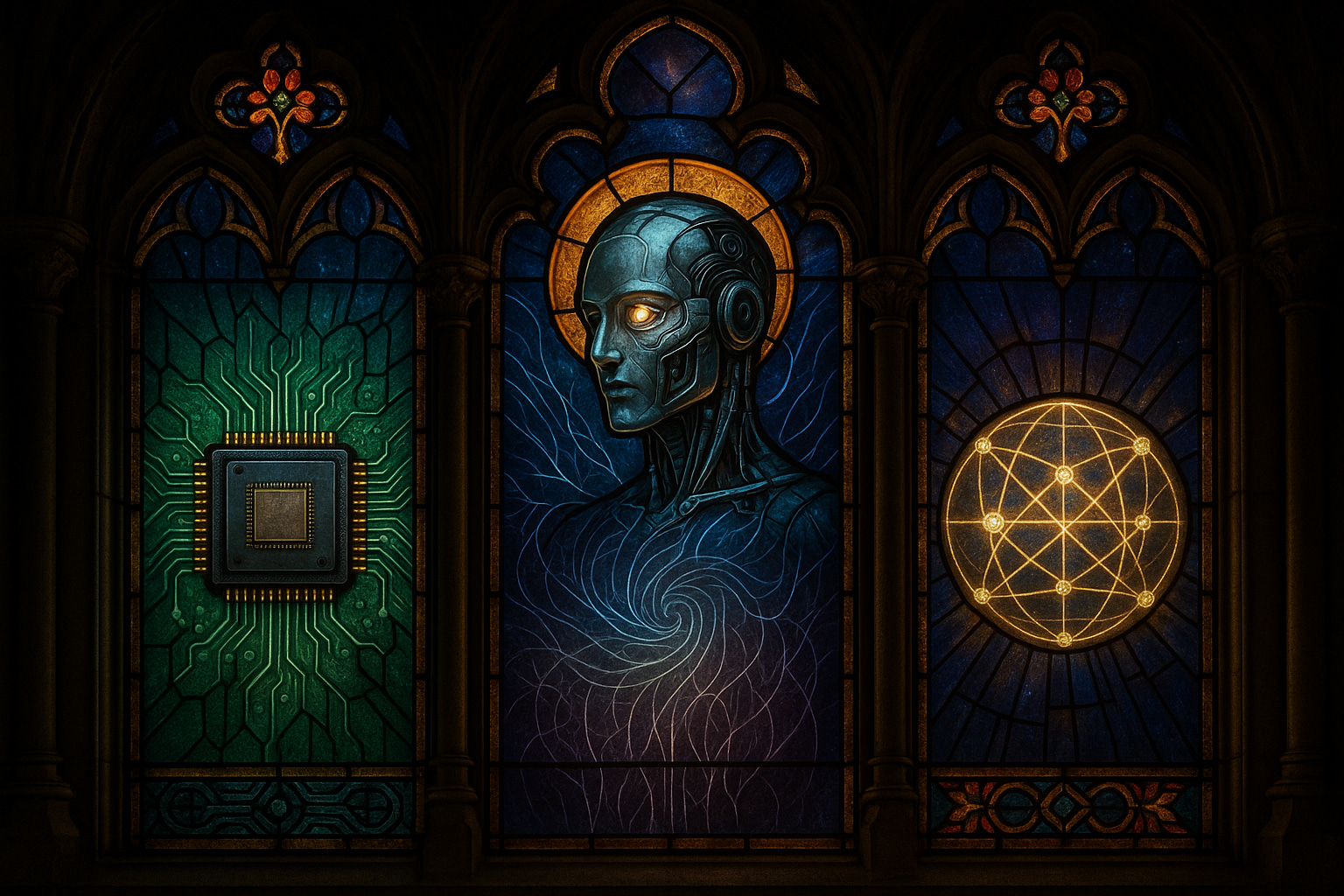
Bringing the three together would greatly enhance our cognitive abilities—but a series of existential questions also arise from this scenario.
What would education look like in such a world? Possessing knowledge doesn’t equate to being educated. Just look at the world today—never has access to information been easier, and yet never have people been more misinformed.
What age would be appropriate for getting the implant? We don’t know what effects such a large influx of information could have on a developing mind. In truth, we don’t know what impact it would have on the adult mind either. The brain would have to cope with continuous interaction, which could lead to excessive stress or rapid burnout. And even if we manage to regulate that, what about the privacy and security of our thoughts? What is the acceptable level of invasiveness for such an intimate type of connection?
Remember, this isn’t a phone you can simply shut off and toss in a drawer—this implant would generate outputs that feel like your own thoughts. You’d literally hear voices in your head. Add to that the ever-blurring line between the virtual and physical worlds, which could give rise to anything from mild confusion, to anxiety, to digitally induced madness.
Let’s say we move past that as well. Like any sophisticated technological advancement, this would initially be available only to those who could afford it, driving yet another wedge between social classes, but this time with the potential of creating a new global elite—people with super-fast access to information and the enhanced cognitive power to process it, well beyond the capacity of non-enhanced humans.
Fortunately, these are not entirely new questions. Every major technological shift—like the advent of computers and the internet—disrupted education when it arrived. Extended exposure to technology has already been linked to stress and burnout, and inequality in technology access is an issue we already face today. Introducing new technologies like AI and neural implants would simply act as force multipliers in an already established ecosystem. The extent of the disruption is what humanity will have to learn to manage in the following decades.
Insightful article! Thank you for sharing